
Optimising Offshore Wind Foundation Installation Through Multi-Contracting
Offshore wind is currently facing a challenging period. With several projects being cancelled in the United States and financing for existing ones becoming increasingly difficult, the industrial supply chain is under pressure. It is clear that innovative solutions are required to convince financiers and banks that offshore wind projects remain viable investments. From a global environmental perspective, delaying offshore wind targets is not an option. In this blog, which was recently published on Recharge, we will discuss how multi-contracting offshore wind foundation installation cuts CO₂ emissions by ~28% and reduces CAPEX through smarter vessel selection.
As with many downturn, there can also be positive outcomes. For several years, the industry has focused on increasing turbine size, pushing manufacturers toward ever-larger machines. However, this trend has placed considerable strain on existing manufacturing capabilities.
With current production lines largely optimised for turbines up to around 15 MW (excluding Chinese turbines), there is a growing need for stability. The current offshore wind market conditions suggest that a temporary cap on turbine size may be emerging, allowing suppliers time to consolidate and industrialise existing designs.
Another major area for optimisation lies in installation strategies. Offshore wind foundations vary by region and soil conditions and include monopiles with transition pieces (TPs), TP-less monopiles, jackets, tripods, and gravity-based foundations. For the purpose of this article, the focus is limited to monopiles with transition pieces and TP-less monopiles.
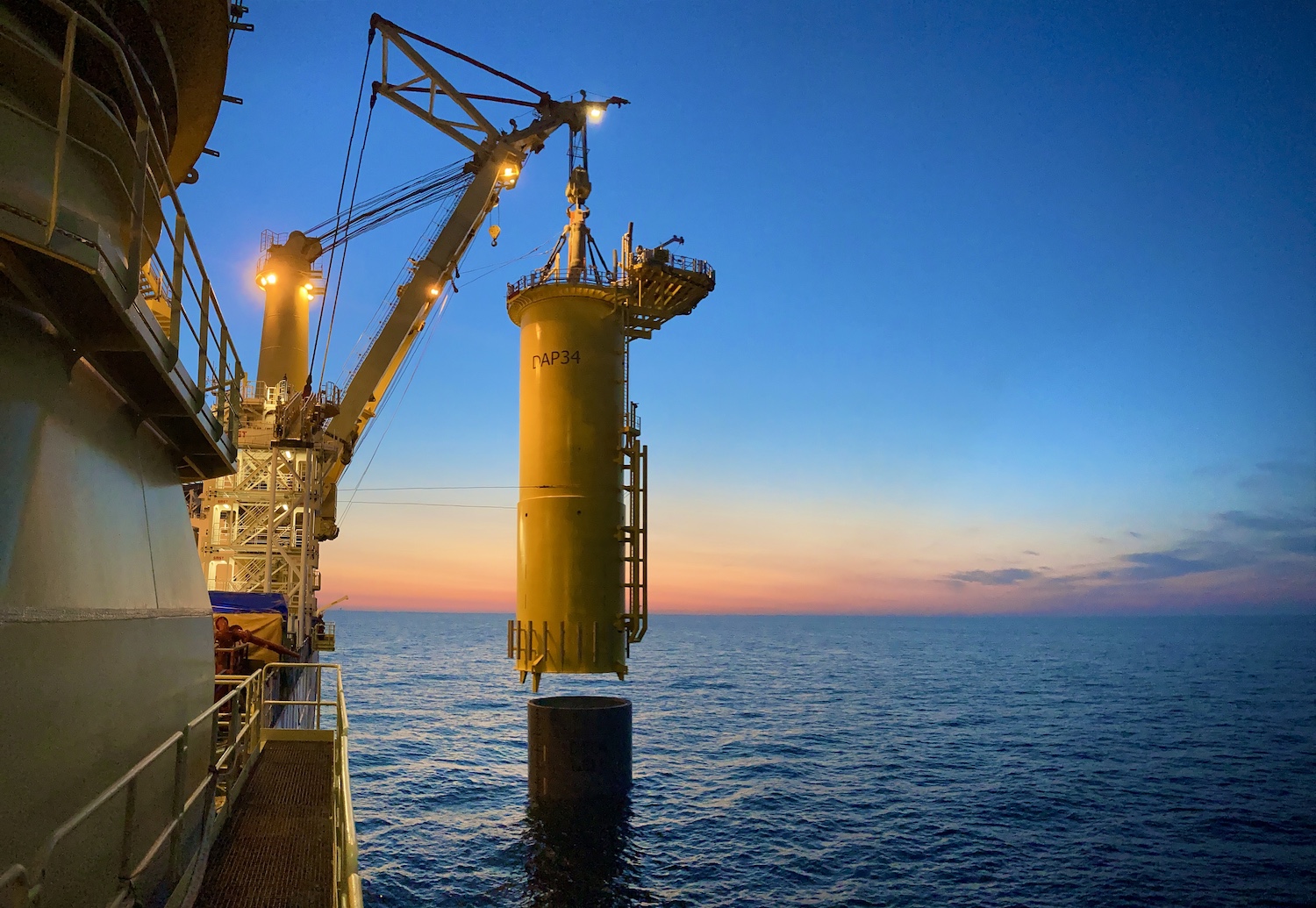
Multi-Contracting strategy
In recent years, offshore wind developers have begun reconsidering multi-contracting strategies. Historically, developers were hesitant to adopt multi-contracting due to concerns over increased interfaces, fabrication delays, and associated knock-on effects However, the current financial pressures in the offshore wind sector are forcing a reassessment of these assumptions.
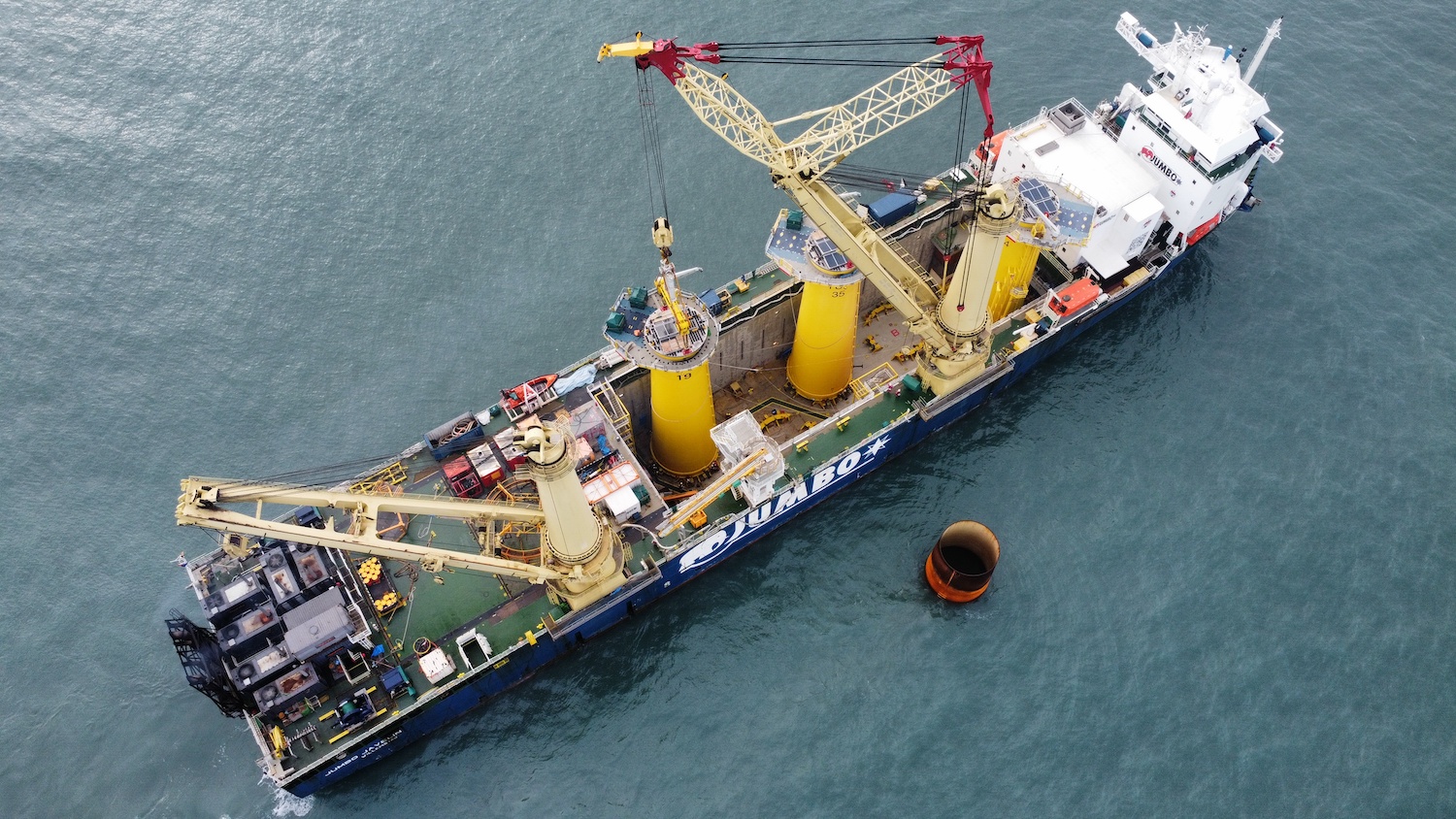
A multi-contracting approach – where monopiles are installed by a large heavy lift vessel and transition pieces or secondary steel structures are installed by a separate, dedicated vessel – offers both financial and environmental advantages.
Lowering Emissions
Comparing fuel emissions between different heavy lift vessels is inherently complex. Each vessel has unique characteristics, operational profiles, and fuel consumption patterns. To enable a meaningful comparison, we could consider two simplified scenarios. One where a large heavy lift vessel installs both monopiles and TPs, and a second scenario where a heavy lift vessel installs monopiles, while a smaller, dedicated vessel installs TPs.
To ensure consistency, we require application of consistent parameter, in this instance that would be:
- An identical number of foundations (100 locations).
- Each vessel carries the same number of structures per trip (five sets).
- The load-out port distance is equal (200 nm).
- Total emissions include load-out, sailing, and installation activities.
- Marine gas oil (MGO) is used as the fuel type throughout all phases.
Jumbo Offshore conducted a preliminary assessment of fuel emissions for both scenarios. Scenario 1 is derived from reasonable assumptions reflecting a large heavy lift vessel performing both scopes, while Scenario 2 is based on actual fuel consumption data from recent Jumbo Offshore projects.
The results indicate that Scenario 2 can achieve an approximately 28% reduction in CO₂ emissions compared to Scenario 1. This demonstrates that multi-contracting – using vessels tailored to specific installation scopes – can significantly reduce the carbon footprint of offshore wind foundation installation.
Cutting costs
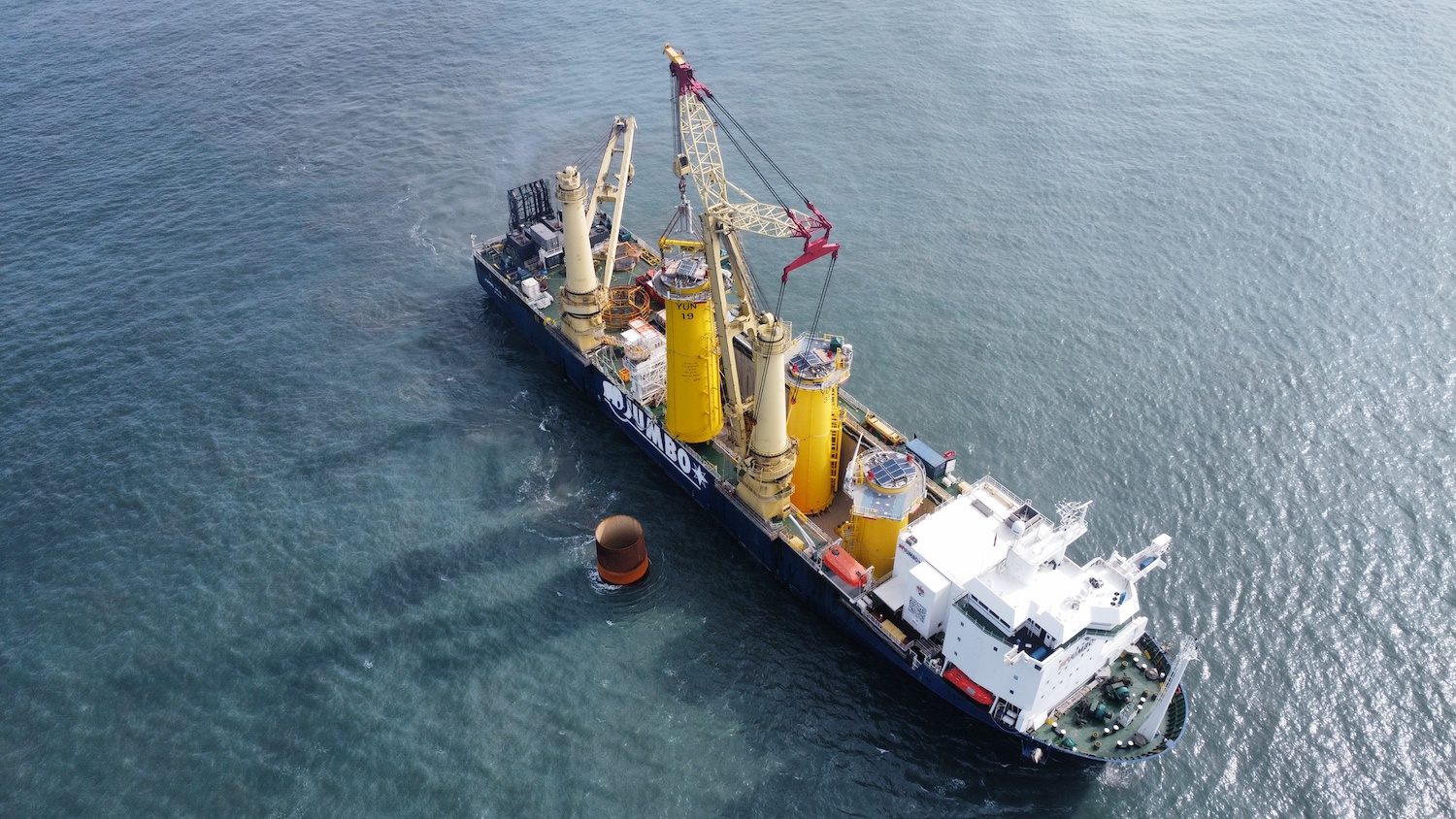
Typical monopiles measure approximately 90 m in length, with diameters of 10–12 m and weights exceeding 1,700 mt. Installing such structures requires crane capacities of around 3,000 mt, which in turn necessitates large vessels with substantial dimensions to ensure stability.
These vessels typically command premium day rates compared to smaller heavy lift vessels, which are sufficient for installing TPs weighing approximately 600 mt. While smaller crane vessels are generally more sensitive to environmental conditions such as wind, waves, and swell, their deployment can be optimised by region, season, and water depth.
By selecting vessels that are appropriately sized for each installation scope, developers can significantly influence the total CAPEX of foundation installation and optimise the project schedule.
A turning point
The offshore wind industry is at a turning point. Financial constraints are forcing developers to re-evaluate long-standing assumptions about installation strategies. Multi-contracting is no longer viewed solely as a risk-laden alternative but increasingly as a practical optimisation tool.
The assessments we have conducted demonstrate that separating monopile and transition piece installation scopes – using dedicated vessels – can deliver substantial CO₂ emission reductions and cost efficiencies, provided that vessel selection is carefully aligned with regional and environmental conditions.
Rather than relying on a single “one-size-fits-all” solution, offshore wind developers are increasingly open to tailored installation strategies. In the current market environment, such flexibility is not only beneficial – it may be essential for the long-term viability of offshore wind projects.”

